
D3 — The Developer Deal Desk The Developer Deal Desk
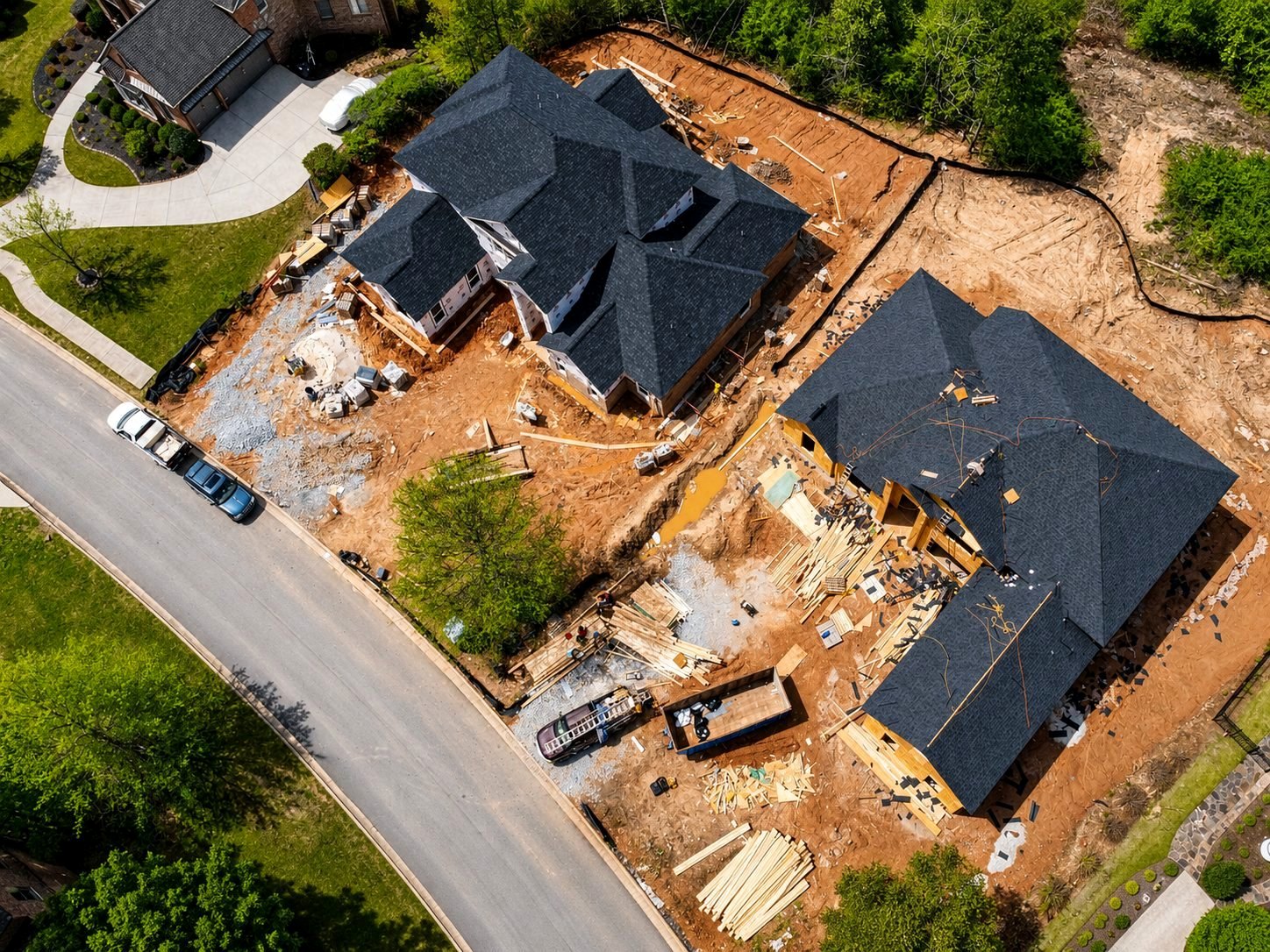
Aerial view of a residential development site
Published deal reviews

Nobody else will show their work.

We publish a full Deal Verdict in public — the memo included. A real listed deal, the same method, the same memo, the same discipline we apply to client files. That is the point.

Every review is dated and tagged by market. Two are published so far, both in Maryland; the library grows as we publish into each new market ahead of any outreach there.

Public Deal Review · No. 001Published 5 August 2026
Maryland Prince George's County Land / for-sale housing

23 Homes on 3.49 Acres — Does the Density Survive?

A live listing: 3.49-acre development site marketed for 23 single-family homes near I-95/I-495 — asking $995,000. Reviewed from public listing information, July 2026.

The deal in one paragraph

A 3.49-acre infill site inside the Beltway orbit, marketed as a development opportunity for 23 single-family homes at an asking price of $995,000 — roughly $43,000 per claimed unit, or $285,000 per acre. I-95/I-495 access supports demand for small-lot new construction in this submarket. The price is based on a yield of 23 units; whether that yield is achievable determines whether the price holds.

The numbers

Asking price$995,000 ($285K/acre; $43K per claimed unit)
Claimed yield23 single-family homes on 3.49 gross acres = 6.6 units/acre gross
The density problem6.6 du/acre gross is small-lot or attached territory. After roads, stormwater, and open space (typically 20–25% of gross), net area is ~2.6–2.8 acres — 23 lots means ~5,000 SF lots. That is not conventional detached product in most PG residential zones.
Finished lot value$110K–$140K per lot for small-lot product near the Beltway (assumption — verify with builder comps)
Development cost / lot$55K–$75K (roads, SWM, utilities, soft costs, bonds)
Residual at 23 lots~$690K–$920K after developer margin
Residual at 14–16 lots~$420K–$640K (the more typical detached yield on this acreage)
Verdict on priceAsking sits above residual even at full claimed yield — and far above it at realistic detached yield.

The pressure points

The yield claim carries the whole price. At 23 units, land cost is $43K per lot. At 15 detached lots, the same $995,000 becomes $66K per lot — above supportable residual value.

Entitlement status determines price. An approved preliminary plan of subdivision for 23 lots is different from a concept sketch. In PG County, the distance between those two is 12–24 months of carry.

Utilities and stormwater decide the budget. Public water and sewer category, SWM requirements, and any offsite work can swing per-lot development cost by $20K+ — enough to erase the margin on its own.

Financeable density requires an approved plan. Construction lenders underwrite the approved entitlement, not the marketed yield.

What the buyer should do

Price the land off the approved yield, not the advertised one. The clean structure: contract at a per-approved-lot price with an entitlement study period, refundable deposit, and the right to terminate if the approved count falls below threshold. If the seller already holds an approved 23-lot plan, the top of the residual band is roughly $920,000 — negotiable distance from the ask, and worth pursuing on that basis. If the yield is a concept sketch, the realistic detached count puts supportable price between the low $400,000s and the low $600,000s, not $995,000.

THE VERDICTRENEGOTIATE

The location earns a serious look. The price assumes a yield the paper may not support. Tie the price to approved lots — or walk.

Get each deal review as it publishes

One email per review. Verdict included. No pitch.
Public Deal Review · No. 002Published 12 August 2026
Maryland Baltimore City Adaptive reuse / multifamily

153,000 SF in the PSO District — Tailwind or Trap?

A live listing: 153,447 SF adaptive-reuse opportunity on a 2.73-acre lot inside Baltimore's Perkins-Somerset-Oldtown redevelopment district. Reviewed from public listing information, August 2026; with no published ask, this review prices the building from its fundamentals rather than the ask.

The deal in one paragraph

A 153,447 SF building on 2.73 acres inside the Perkins-Somerset-Oldtown (PSO) transformation area — a 244-acre district anchored by a $30M HUD Choice Neighborhoods grant, with more than $540M leveraged to date inside a billion-dollar planned transformation and a program of approximately 1,345 mixed-income units, new parks, ground-floor retail, and a new school, minutes from Johns Hopkins and the waterfront. The district's public funding and program are established. At this scale, the building's conversion cost and stabilized value determine whether the acquisition basis is favorable.

The numbers

Asking priceNot publicly listed — price on request from the broker. This review therefore runs the analysis backwards: it derives the maximum acquisition number the conversion can support, and that number is the test any stated ask would have to pass.
Building / site153,447 SF on 2.73 acres, PSO redevelopment district
Likely highest and best useResidential conversion (workforce/mixed-income) with ground-floor activation — consistent with the district plan
Indicative unit yield~135–165 units at 75–80% efficiency, 750–850 SF average
Conversion cost$180–$240/SF depending on structure, systems, and historic treatment = ~$28M–$37M before acquisition
Stabilized value~$185K–$225K per unit in this submarket = ~$25M–$37M (assumption — verify with rent and cap-rate comps)
The conventional residualStabilized value minus conversion cost minus margin leaves little to nothing for acquisition. Conventionally underwritten, the building is worth close to zero.
The subsidy stackFederal Historic Tax Credits (20%) + Maryland state HTC if eligible, LIHTC or local soft debt for an affordable component, Enterprise Zone benefits, and CNI adjacency. Layered correctly, the stack can move project feasibility by $10M+ and is the only path to a real land value here.

The pressure points

The residual is negative without the stack. Underwritten conventionally, without the subsidy stack, the building supports little to no acquisition price. The subsidy stack is required for feasibility, not an enhancement to it.

HTC eligibility is the gate. Whether the building qualifies for historic certification (and at what treatment cost) swings the capital stack by eight figures. That determination is knowable during a study period for modest cost, and should be confirmed before price is finalized.

At 153,000 SF, structure risk is budget risk. Floor plates, window ratios, systems replacement, and environmental condition determine whether conversion lands at $180 or $240 per foot. Sixty dollars a foot on this building is $9.2 million.

The district timeline is not the underwriting timeline. The billion-dollar transformation delivers over many years. The pro forma should use today's rents with modest growth, not the district's fully built-out rents.

What the buyer should do

Control the building; do not buy it yet. The structure that fits: a long study period or option with a modest, staged deposit, gated on three answers — HTC Part 1 determination, structural and environmental assessment, and a term sheet conversation with the district’s public partners. If the stack assembles, the acquisition basis is favorable. If it does not, the option expires and the buyer's cost is limited to the option payment, not the full purchase price.

THE VERDICTPAUSE

Real tailwind, unforgiving math. This deal is won or lost in the subsidy stack — control the building, prove the stack, then buy.

Get each deal review as it publishes

One email per review. Verdict included. No pitch.

Public Deal Review · No. 003Published 8 September 2026
District of Columbia Petworth / Brightwood Entitled multifamily site

Twenty Units on 3,833 Square Feet — Does the Rent Roll Exist?

A live listing: a 3,833 SF lot in Upper Petworth marketed as a fully entitled 20-unit, five-story development site — asking $1,500,000, with a "9.50% cap rate" and "projected stabilized gross annual rental income exceeding $1.2 million." Reviewed from public listing information, September 2026.

The deal in one paragraph

A small infill lot on 1st Street NW in the Brightwood–Upper Petworth submarket, roughly a mile from Fort Totten Metro and a mile and a half from the Parks at Walter Reed, marketed as a fully entitled site with approved plans for 20 apartments in 13,158 SF over five stories: fourteen one-bedrooms, four two-bedrooms and two penthouses. The ask is $1,500,000 — $75,000 per approved unit, about $391 per square foot of land — and the listing is flagged as a distress, shell-condition, REO sale. The location is sound and the entitlement, if it is what it says it is, has real value. The problem is the income the marketing hangs on it: $1.2 million a year on twenty mostly one-bedroom units is $5,000 a unit a month, in a submarket where brand-new Class A product a mile and a half away leases one-bedrooms for $2,100 to $2,950 with up to three months free.

The numbers

Asking price$1,500,000 ($75K per approved unit; ~$391/SF of land; ~$114 per buildable SF). Listed May 2026; prior asking $1,699,000; last recorded sale $1,600,000 in September 2022
The site3,833 SF lot, zoned MU-4. A 1930s two-story structure stands on it and would be razed. Marketed as "Distress Sale; Shell Condition; REO Sale"
Marketed program20 units · 13,158 SF · 5 stories = 3.43 FAR on the lot
The FAR questionMU-4 allows 2.5 FAR by right and 3.0 with Inclusionary Zoning, with up to 0.4 FAR of penthouse habitable space exempt. 13,158 SF on 3,833 SF is at or over that ceiling unless the figure includes cellar space. Height is capped at 50 feet — five stories plus a penthouse level is tight. The zoning sheet on the approved drawings answers this; the listing does not
Inclusionary ZoningMandatory at 10 or more units: 8–8.3% of residential floor area for steel and concrete, 10–12.5% for wood frame, rented at 60% of median family income. That is two to three of the twenty units, at roughly half of market rent — and nowhere in the marketed $1.2 million
The income claim$1.2M ÷ 20 units ÷ 12 = $5,000 per unit per month, blended, on a mix that is 70% one-bedrooms. Class A comparables in the submarket: one-bedrooms $2,100–$2,950, two-bedrooms $2,800–$4,100, with up to three months free. Submarket one-bedroom medians $1,600–$1,900. A benchmark gross for this mix is roughly $620K–$700K before IZ units, vacancy and concessions
The cap-rate claim"9.50%" against a market where stabilized DC apartments trade at roughly 4.7%–5.6% and infill multifamily is the most bearish subtype in the latest national survey. Applied to $1.5M it implies $142,500 of income from a vacant lot. It is a marketing figure, not a market figure
Cost to build$300–$400/SF hard on 13,158 SF = $3.9M–$5.3M, plus demolition, soft costs at 20–30%, financing and carry: roughly $5.5M–$7M before land (assumption — a DC-specific small-infill figure should be priced by a GC). Fully permitted 22-unit comparable eight blocks away, 70% built, asks $332K a unit and has sat for two and a half years
Rental yield on costBenchmark NOI ≈ $400K–$455K (65% of a $620K–$700K gross). On $7M–$8.5M all-in including the land, that is roughly a 4.7%–6.5% yield on cost against a 5.25%–5.5% exit — a development spread near zero at the midpoint. A construction lender or equity partner wants 100–150 basis points of spread, which means a yield on cost of about 6.5%: an all-in budget of roughly $6.6M, with the land being whatever is left after the building
Residual land value — rentalRoughly $350K–$1.1M at a 6.5% yield-on-cost hurdle, midpoint about $700K — on benchmark rents. On the marketed $5,000-a-unit rent the residual would sail past the ask, which is the point: the number on the listing is a rent assumption, not a price
Residual land value — for-saleIf the program is built as condominiums (assumption: new-build one-bedrooms $400K–$475K, two-bedrooms $550K–$700K, penthouses $750K–$850K — verify with condo comps), sellout net of selling costs and two IZ units is roughly $9.0M–$9.4M against $5.5M–$7M of cost and a 15% developer margin. Residual: roughly $0.9M–$1.3M, and it reaches the ask only if every assumption breaks the buyer’s way
The tax recordThe public tax record shows a substantial balance outstanding on the parcel, coded for tax sale. It clears at closing; a buyer should confirm the payoff is in the seller’s number, not the buyer’s
Verdict on priceAbove residual on either program: roughly double the rental residual at the midpoint, and above the top of the for-sale band. Within negotiating distance only on a for-sale program with the permit confirmed, the FAR reconciled and the IZ units in the model

The pressure points

The rent line carries the whole marketing. Every claim on the listing — the cap rate, the $1.2 million, the $75,000 a unit — descends from $5,000 a month per apartment. Nothing within a mile and a half rents at that number, including the newest Class A building in the submarket, which is offering three months free. Replace the rent and the cap rate collapses to a yield on cost that no construction lender underwrites.

The FAR needs the zoning sheet, not the brochure. 13,158 SF on 3,833 SF is 3.43 FAR. MU-4 stops at 3.0 with IZ plus a 0.4 penthouse exemption. Either the marketed area includes a cellar, or the approved plans rely on something the listing does not disclose. A buyer finds out which one on the first sheet of the approved drawings — before contract, not after.

"Fully entitled" needs a permit number. Approved plans and an issued building permit are different things, and a permit is issued to a permittee. The listing names no permit, no issue date, no expiry and no holder. In the District, a permit that lapses restarts. A shell-condition REO sale is exactly where that question matters most.

Inclusionary Zoning was not in the number. Twenty units in MU-4 is an IZ building. Two or three apartments at 60% of median income is a permanent discount to the rent roll and to the exit value, and a for-sale program carries the same obligation at a different income band.

The concession market is the market. More than half of DC-area listings are offering concessions and new supply is not expected to bottom until 2027. A twenty-unit building with no parking and no amenity package competes against 300-unit Class A product on rent alone.

What the buyer should do

Reprice the land, not the rent. On benchmark rents a rental program supports roughly $350,000 to $1.1 million of land at a lender’s hurdle, and no amount of negotiating fixes a rent roll that is double the submarket. On a for-sale program the site can carry more — roughly $900,000 to $1.3 million — and it moves toward the ask only if four things are true: the building permit is issued, transferable and unexpired; the zoning sheet reconciles 13,158 SF with the MU-4 envelope; condo comparables in Petworth confirm the pricing; and the tax balance clears at closing on the seller’s side. Contract with a study period tied to those four items, a refundable deposit, and a price that reflects what the drawings say rather than what the brochure says.

THE VERDICTRENEGOTIATE

The location and the entitlement earn a look. The rent roll does not exist. Reprice the land to a for-sale program with the permit in hand — or walk.

Get each deal review as it publishes

One email per review. Verdict included. No pitch.

Public Deal Review · No. 004Published 8 September 2026
Georgia DeKalb County Land / townhome subdivision

Twenty Townhome Lots on 2.88 Acres — Entitled Until October 23

A live listing: 2.88 acres on Columbia Parkway in south DeKalb County, marketed as a fully entitled 20-lot townhome subdivision under a sketch plat approved in October 2024 — asking $560,000. Reviewed from public listing information, September 2026.

The deal in one paragraph

A 2.883-acre parcel on Columbia Parkway south of I-20, in the Panthersville area of unincorporated DeKalb County, zoned RSM and marketed as approved for a 20-lot townhome subdivision with an engineered plan showing a public internal street, two stormwater detention ponds, and public water and sewer to every lot. The ask is $560,000 — $28,000 a lot, about $194,000 an acre — and the listing says that is "well below area residual land value." The zoning is right: RSM permits townhouses by right. The plat is real: Sketch Plat #1247135, approved by the Planning Commission on October 23, 2024. The question is what that approval is worth on October 24, 2026, because under the county’s own rule a preliminary plat expires twenty-four months from approval, cannot be renewed, and sends the applicant back to the start.

The numbers

Asking price$560,000 ($28,000 per marketed lot; ~$194,000 per acre). On market since 13 August 2026. County assessment carries the land at a small fraction of the ask
The site2.883 acres, RSM zoning, unincorporated DeKalb County, Panthersville. Marketed with an engineered plan: one public street, two detention ponds, public water and sewer available
Marketed yield20 townhome lots = 6.9 units per acre
The density questionRSM base density is 4 units an acre — 11 lots on this site — and 8 with bonuses. Twenty lots means the plat was approved on a density bonus: enhanced open space, workforce housing, or similar, each of which carries a binding obligation that reduces sellable units or revenue. Earlier marketing of the same parcel said 22 units. The approved plat and its conditions say which bonus and what it costs
What "fully entitled" means hereA sketch plat is the county’s preliminary plat: it establishes the layout and lets the applicant apply for a Land Disturbance Permit. Still ahead of a buyer: the LDP itself (DeKalb review 60–120 days, the longest in the metro), a sewer capacity request under the county’s consent-decree program (two to three months, more if a sewer action plan is required), the final plat that creates the twenty legal lots, and building permits
The clockPlat approved 23 October 2024; valid through 23 October 2026 — 45 days from the date of this review. An expired plat cannot be renewed; the applicant restarts the sketch-plat process. Unless an LDP is already issued or in review, the entitlement being sold cannot be carried across the expiry by a buyer who contracts today
New townhome pricing, same school zone$349K–$390K asking for 1,910–1,950 SF three-side-brick townhomes at the one active new-construction community nearby (assumption on closings — verify with the MLS). Resale townhomes in the ZIP trade at $105K–$245K, median about $190K; the ZIP’s median sale price fell 6% year over year to $235K
Finished-lot residualAt a $350K–$390K sale price, a finished townhome lot supports roughly $20K–$60K after vertical cost at $110–$150/SF, soft and selling costs, and builder margin — and nothing at all above about $160/SF (assumption — Atlanta townhome vertical costs should be priced by a builder)
Horizontal costOne public street, two detention ponds, water, sewer and storm for twenty lots on 2.88 acres: roughly $350K–$600K before soft costs on generic unit rates — $17K–$30K per lot (assumption — the approved construction drawings should go to a civil engineer for a real number)
Raw-lot residualFinished-lot residual of $20K–$60K less horizontal cost of $17K–$30K leaves roughly $0–$40K per raw lot — $0 to $800K for the site, with the ask sitting in the upper half of a band whose lower half is zero
The verified comparableA 3.8-acre south DeKalb parcel a mile and a half away, approved for eight detached lots with an LDP in hand and partial infrastructure complete, was listed at $1.4M in May 2024 and closed at $615,000 in February 2026 — $162K an acre, $77K a lot, after twenty-one months and three price cuts
Verdict on priceDefensible only if the LDP is live and the plat conditions are benign; not supportable as raw RSM land at 4 units an acre, which is what the parcel becomes on October 24

The pressure points

The entitlement is the price, and it has 45 days to live. Every dollar above raw-land value on this listing is the plat. The county rule is unambiguous: twenty-four months, no renewal, restart. A buyer who signs a contract this week, runs a normal study period and files an LDP cannot get it issued inside DeKalb’s 60–120-day review before the plat lapses. The only question that matters on the first call is whether the seller already holds or has filed an LDP.

Twenty lots is a bonus density, and bonuses have strings. RSM gives four units an acre by right; this plat is at nearly seven. The county granted that through a density bonus — enhanced open space, workforce housing, or a combination — and the conditions travel with the plat. A workforce-housing condition changes the revenue on a fifth of the units; a forty-percent open-space condition changes the layout. Either changes the residual.

Availability is not capacity. DeKalb operates its sewer system under a federal consent decree with a mandatory capacity assurance program. "Public sewer available to all lots" is a statement about pipes, not about permission to connect twenty new homes. The capacity request is a separate, months-long process and it can come back with conditions.

The market under the lots is soft. The ZIP’s median sale price is down 6% year over year and resale townhomes trade around $190,000. One builder is selling new product at $350,000-plus in the same school zone; whether it is closing at that number is unverified, and twenty more units at that price point need absorption the resale market does not obviously promise.

The engineering is the cost. Two detention ponds on under three acres is a signal — a drainage divide, a downstream constraint, or a buffer taking land — and it is the difference between $17,000 and $30,000 a lot of horizontal cost. The approved construction drawings exist; the cost of building them is what a buyer is really pricing.

What the buyer should do

Do not buy the plat on the calendar it has. Control the parcel instead: an option or a contract with a study period that runs past October 23, at a nominal deposit, and gate the purchase on three determinations. First, the LDP — issued, in review, or not filed — confirmed with the county, with a written statement of what a pending application does to the expiry. Second, the approved plat with its conditions, so the buyer knows which bonus was used and what it obliges. Third, a civil engineer’s horizontal estimate from the approved drawings. If the LDP is live and the conditions are benign, the site can carry a price in the range of the ask and the buyer should move quickly. If the plat lapses without an LDP, the parcel is raw RSM land at four units an acre and the supportable number is in the $200,000s, not $560,000.

THE VERDICTPAUSE

The zoning is right and the plat is real — for 45 more days. Option it through the expiry, gate on the LDP and the plat conditions, and price the land as what it will be on October 24.

Get each deal review as it publishes

One email per review. Verdict included. No pitch.

Have a deal on your desk?

The Deal Verdict does this to your deal, confidentially, in 72 hours. Pursue, renegotiate, pause, or kill — in writing, with the numbers behind it. $1,995 flat; 100% of the fee credits toward any deeper Deal Desk engagement commenced within 30 days of memo delivery.

Book the 15-minute call

These reviews are independent opinions based on public listing information and stated assumptions, prepared for educational purposes. They are not an appraisal, not investment advice, and not a criticism of any party. Figures are ranges, not certainties; any buyer should verify all facts in due diligence. The Developer Deal Desk has no relationship with the listings or their brokers.

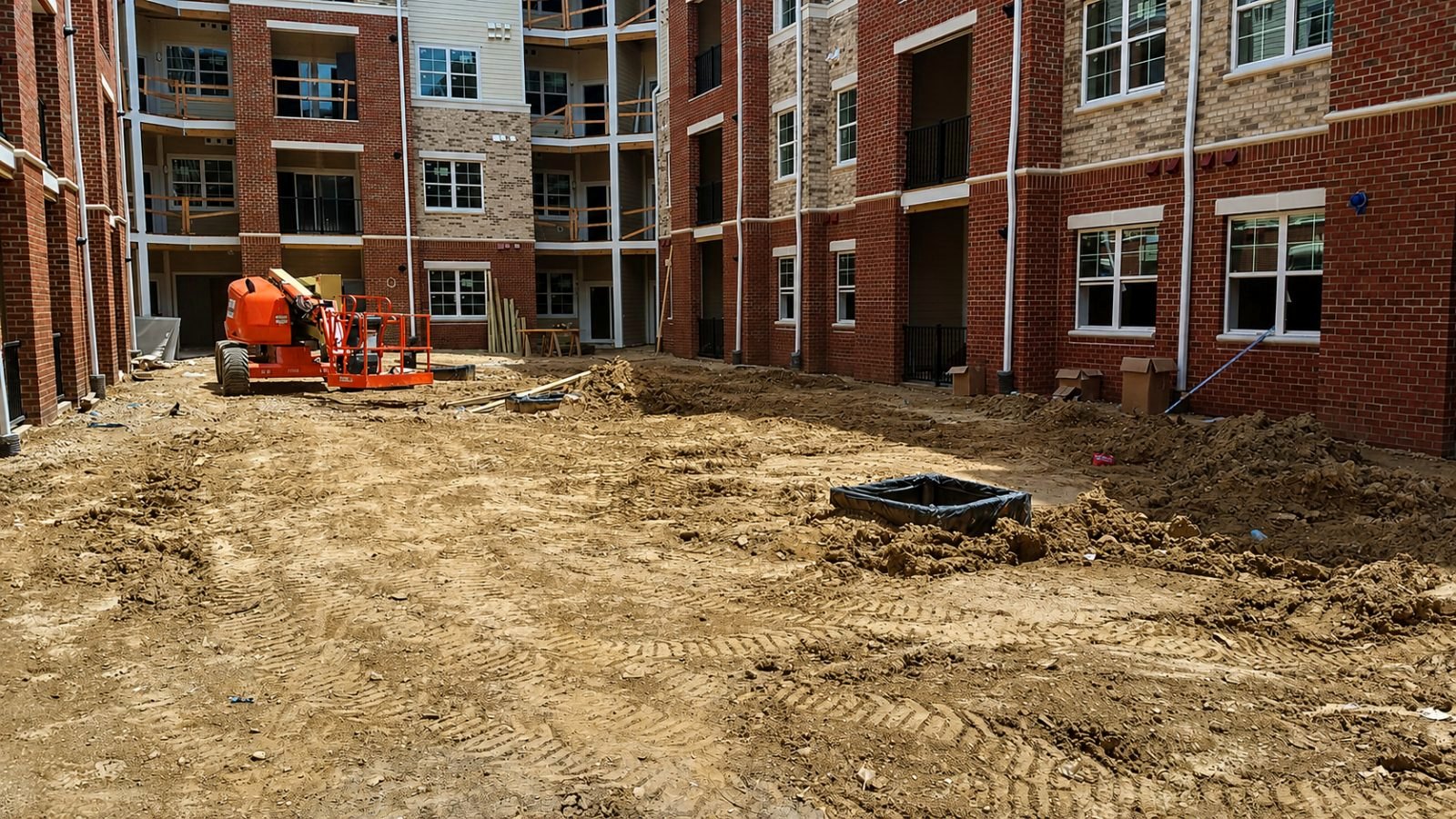
Multifamily building courtyard mid-construction

Same method, same memo.

What we publish in public is exactly what a client receives in private: the verdict, the numbers behind it, and the one lever that fixes the deal if it is fixable.